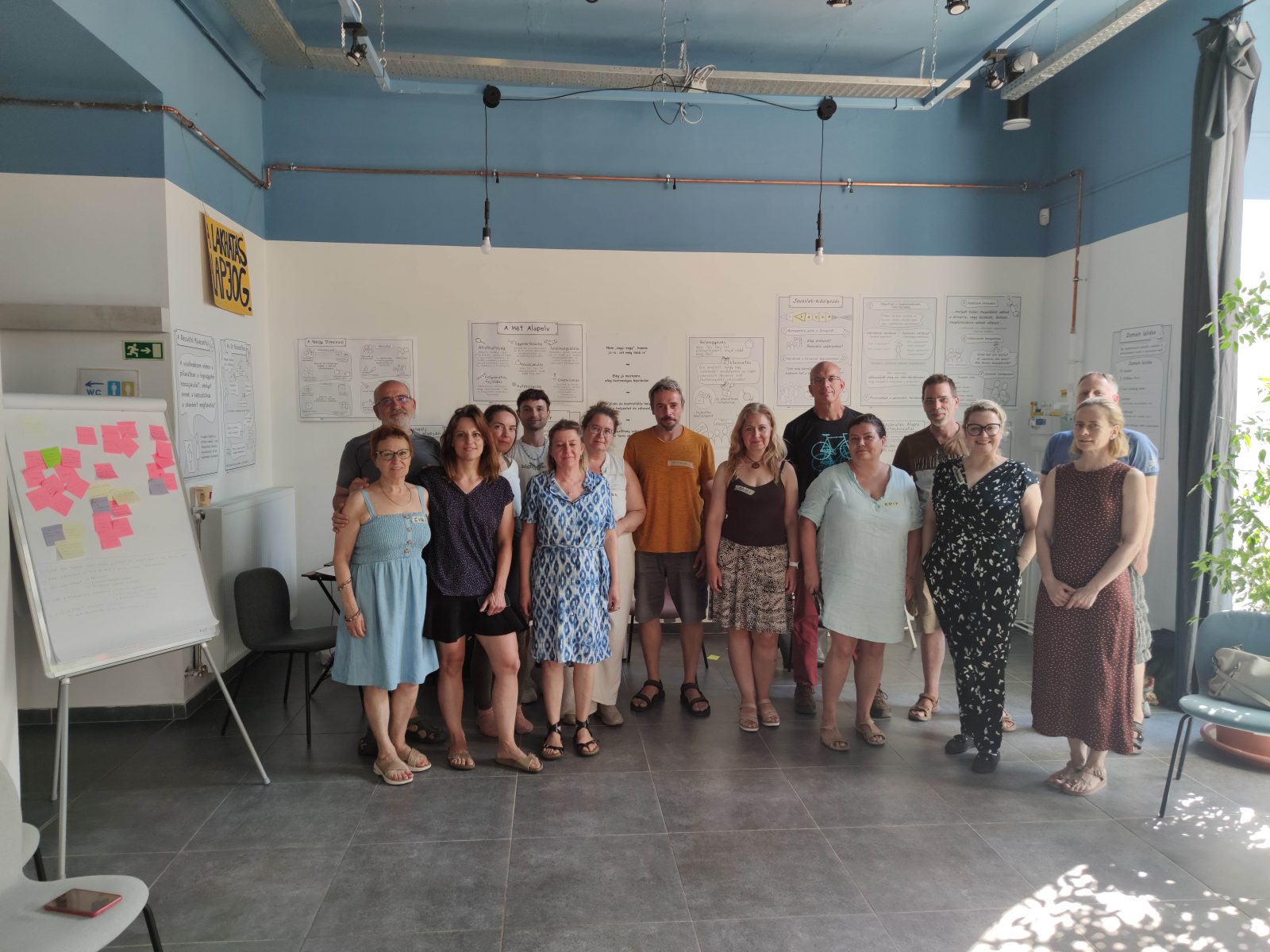
The Profilantrop Association delivered a comprehensive Sociocracy 3.0 (S3) training program in Budapest in July 2026, bringing together NGO professionals, social entrepreneurs, and community organizers to explore this innovative governance methodology. The initiative, supported by NGO Academy as a Community Led Event, kicked off the formation of Hungary’s first S3 Community of Practice. Read Profilantrop’s event report below – including useful resources and training material.
Program Structure and Approach
The training followed a blended learning design, beginning with an online webinar on July 9th that introduced participants to the theoretical foundations and methodological framework of Sociocracy 3.0. This preparatory session, ensured all attendees started the in-person workshop with aligned understanding and shared vocabulary.
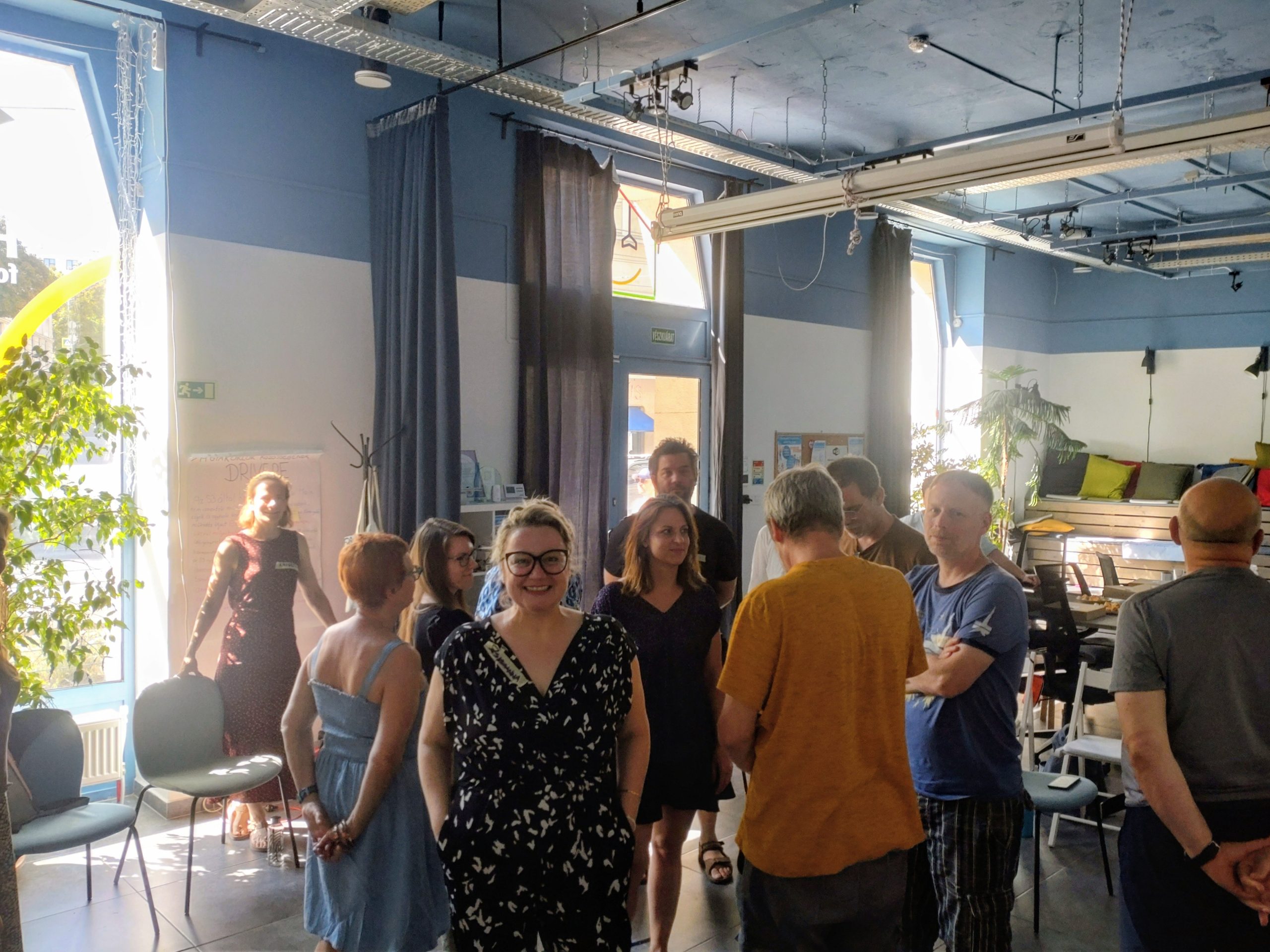
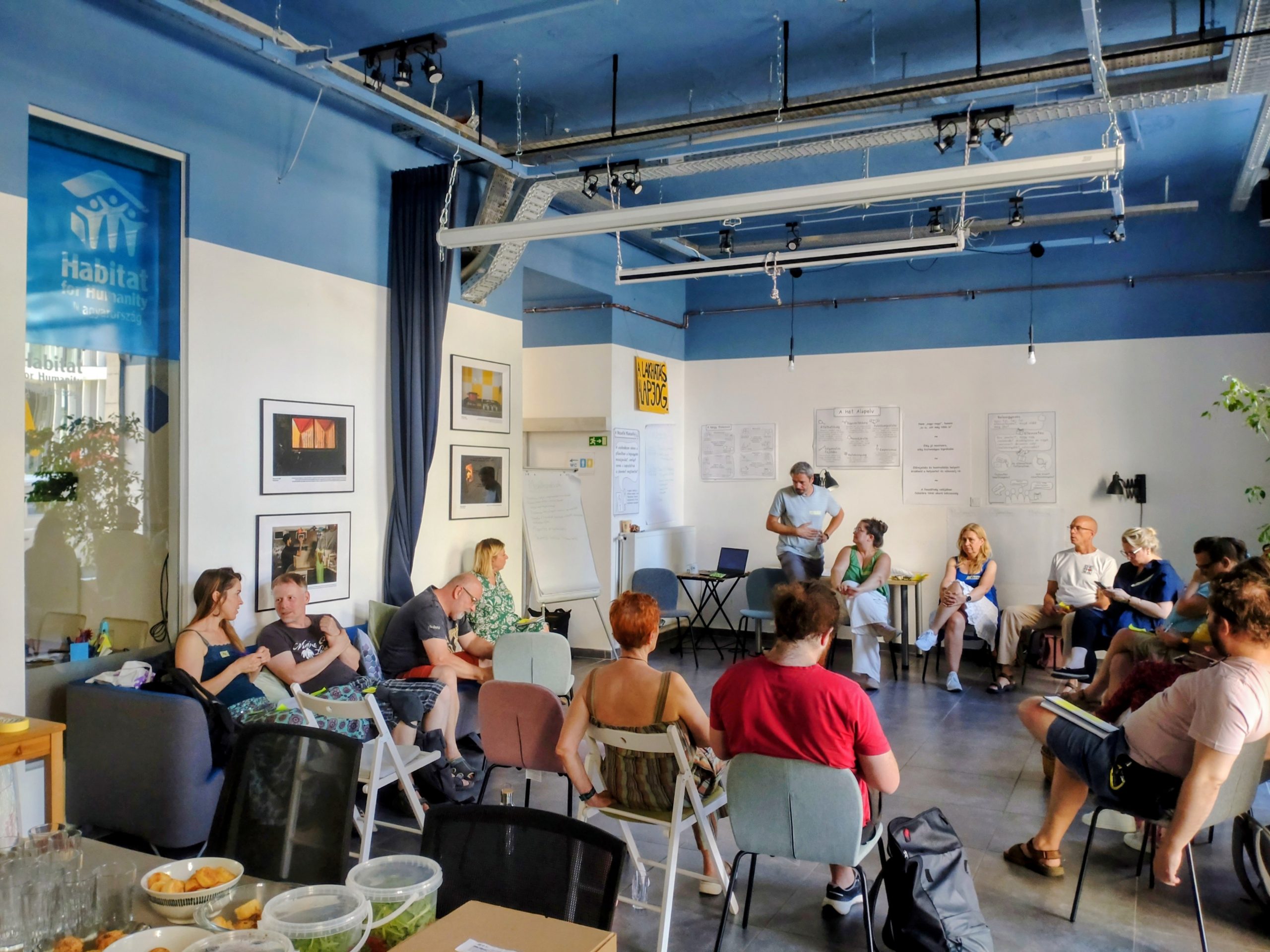
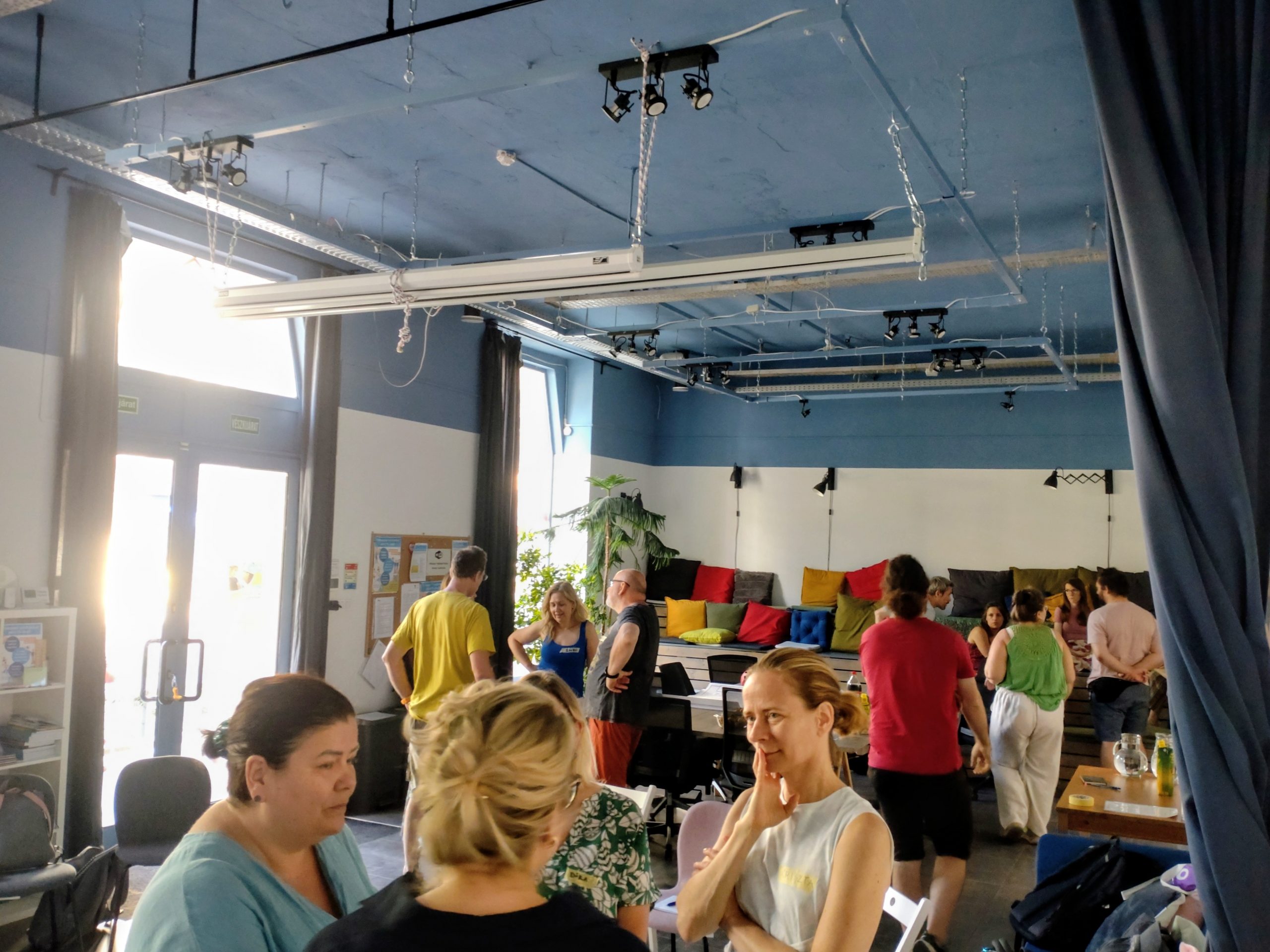
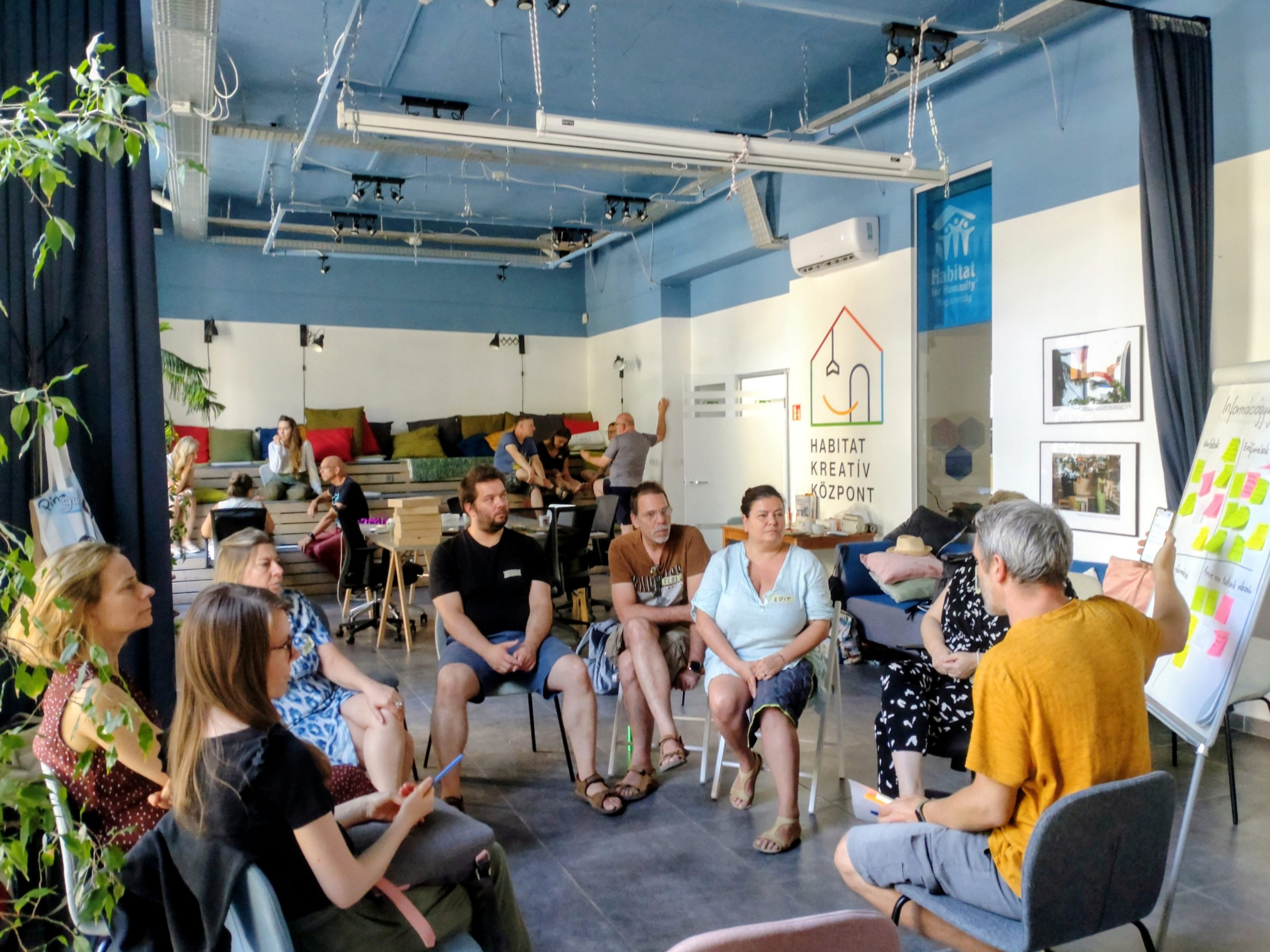
The intensive two-day in-person workshop on July 29-30 took place at the Habitat Creative Center in Budapest, hosted by Habitat for Humanity Hungary. Sixteen active participants engaged in hands-on practice, working through S3 methods from foundational concepts to advanced applications.
Learning Journey: From Theory to Practice
The program was deliberately structured to accommodate participants with varying levels of prior S3 knowledge. While none were actively practicing sociocracy in their daily work, some had encountered concepts through various sources.
The in-person session emphasized experiential learning in the spirit of a “sense and respond” approach. The curriculum was fully tailored to the group’s emerging needs, progressing systematically from basic practices—such as circles, consent decision-making, and timeboxes—to increasingly sophisticated processes including formulating drivers and proposal forming.
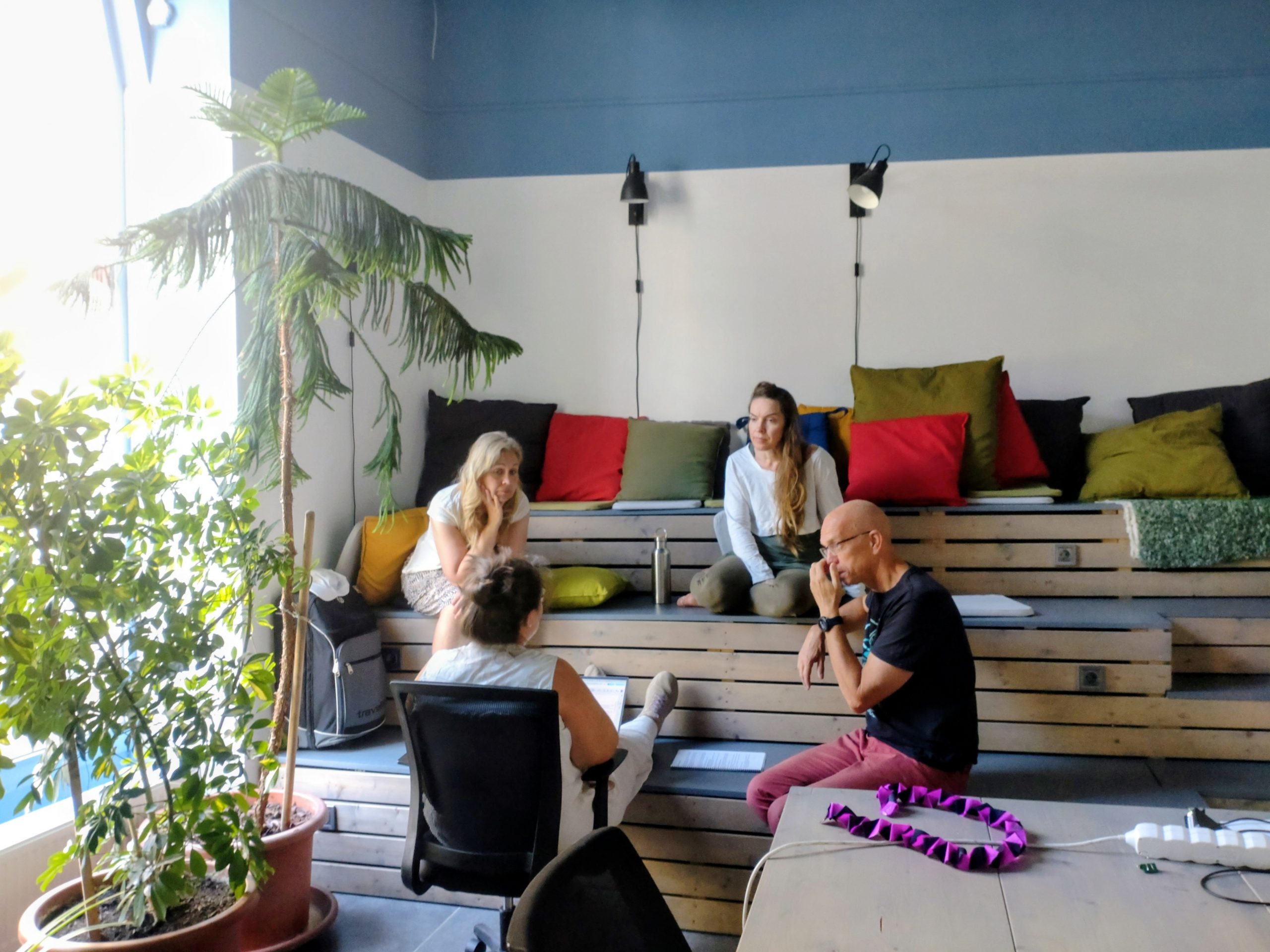
On the second day, participants worked in small groups, allowing everyone to immerse themselves in the methodology according to their preferred learning style. This flexibility ensured deep engagement across diverse learning preferences.
Participant Diversity and Engagement
The training attracted a remarkably diverse group of 16 participants representing:
Social entrepreneurs
Community garden organizers
Members of role-playing groups
NGO staff members from various organizations
This diversity enriched the learning experience, as participants brought different organizational contexts and challenges to their practice sessions. According to personal feedback collected during and after the training, the majority of participants are planning to integrate the methods they learned into their professional work.
Key Outcomes and Impact
Nearly 30 people gained thorough knowledge about sociocracy through the combined webinar and workshop format, with approximately half experiencing the methods firsthand through intensive practice. Participants reported high motivation and active engagement throughout both sessions. One of the most significant achievements was the collaborative initiation of the Hungarian S3 Community of Practice (CoP). This emerging community brings together organizations that are working collectively to popularize the sociocracy approach across Hungary and deepening their S3 practices within their own operations
Resources in Hungarian for Continued Learning
All materials created for the training remain publicly available, ensuring the program’s impact extends beyond the immediate participants:
50-page Guidebook: Compiled and translated from online S3 sources, providing comprehensive reference material
Webinar: Available on YouTube for asynchronous learning
Presentation: PPT presented on the webinar (subtitles with automatic translation in English available)
Training posters and visual aids: Supporting materials for future reference
Acknowledgments
The success of this training program reflects the collaborative spirit of all involved stakeholders. Special gratitude goes to:
All 16 participants for their outstanding engagement and openness to experimentation
NGO Academy for supporting this learning journey as a Community Led Event
Habitat for Humanity Hungary for providing the venue and active participation
The diverse community organizations whose representatives brought energy and real-world context to the learning process
For all involved, it was a strengthening experience to cooperate and learn together in an atmosphere of mutual respect and shared curiosity about organizational innovation.