
This Community-Led Event on how AI transforms education and amplifies non-profit impact was organized by our Member Organisation UiPath Foundation, and took place online in May 2026. Read their report below to get deeper insights into their sessions on the future of education, the EU AI Act and AI in the funding cycle.
Artificial Intelligence is no longer a distant line item on a tech wishlist — it is actively reshaping how civil society operates. To help organizations navigate this massive technological shift, the UiPath Foundation, with support from the NGO Academy, hosted a dynamic online conference dedicated to exploring how AI transforms education and amplifies non-profit impact.
The event brought together 145 NGO professionals from 90 organizations spanning 17 countries to address everything from emerging learning frameworks to strict legal compliance. Here are the critical takeaways your organization needs to know to move from casual experimentation to strategic implementation.
The future of education in the context of AI developments
The session explored the rapid evolution of Artificial Intelligence and its profound disruption of traditional educational ecosystems. Rather than viewing AI merely as a suite of productivity tools, the panel frames it as a structural shift that fundamentally changes what students need to learn, how educators teach, and where NGOs must step in to bridge emerging equity gaps.
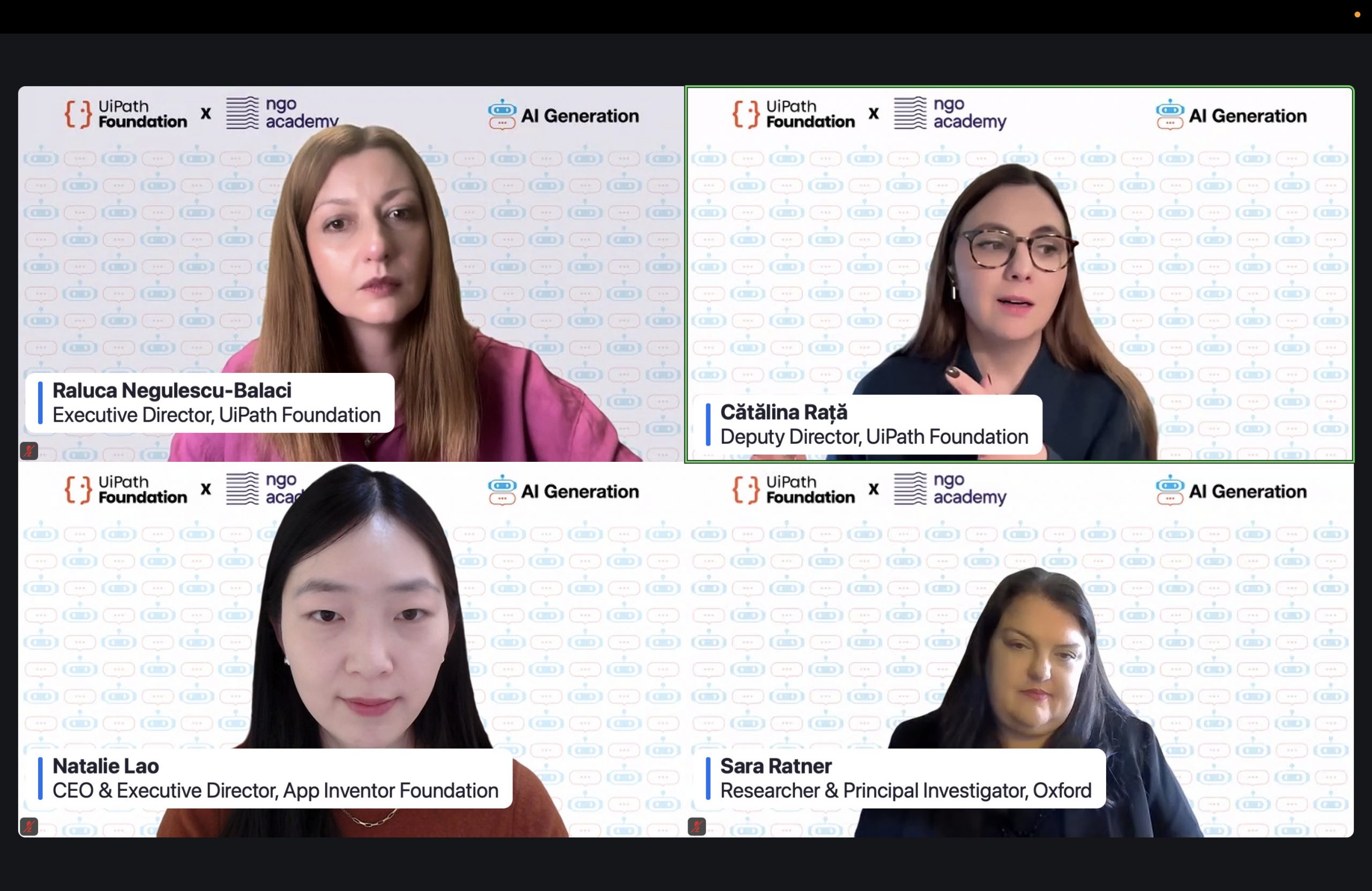
The critical discussion was moderated by Raluca Negulescu-Balaci (Executive Director, UiPath Foundation) and enriched by an expert panel:
Speakers:
Natalie Lao (Executive Director, App Inventor Foundation; co-author of UNESCO’s AI Competency Framework for Students), who provided global insights into building student agency and literacy.
Sara Ratner (Research Officer; Principal Investigator AI in Education at Oxford University), who shared essential research on how AI developments impact classroom learning and institutional framework adaptations.
Cătălina Rață (Deputy Director, UiPath Foundation), who grounded the conversation in actionable strategies for NGOs to ensure marginalized communities are not left behind.
Watch the entire discussion here:
The regulatory wake-up call: The EU AI Act and “shadow AI”
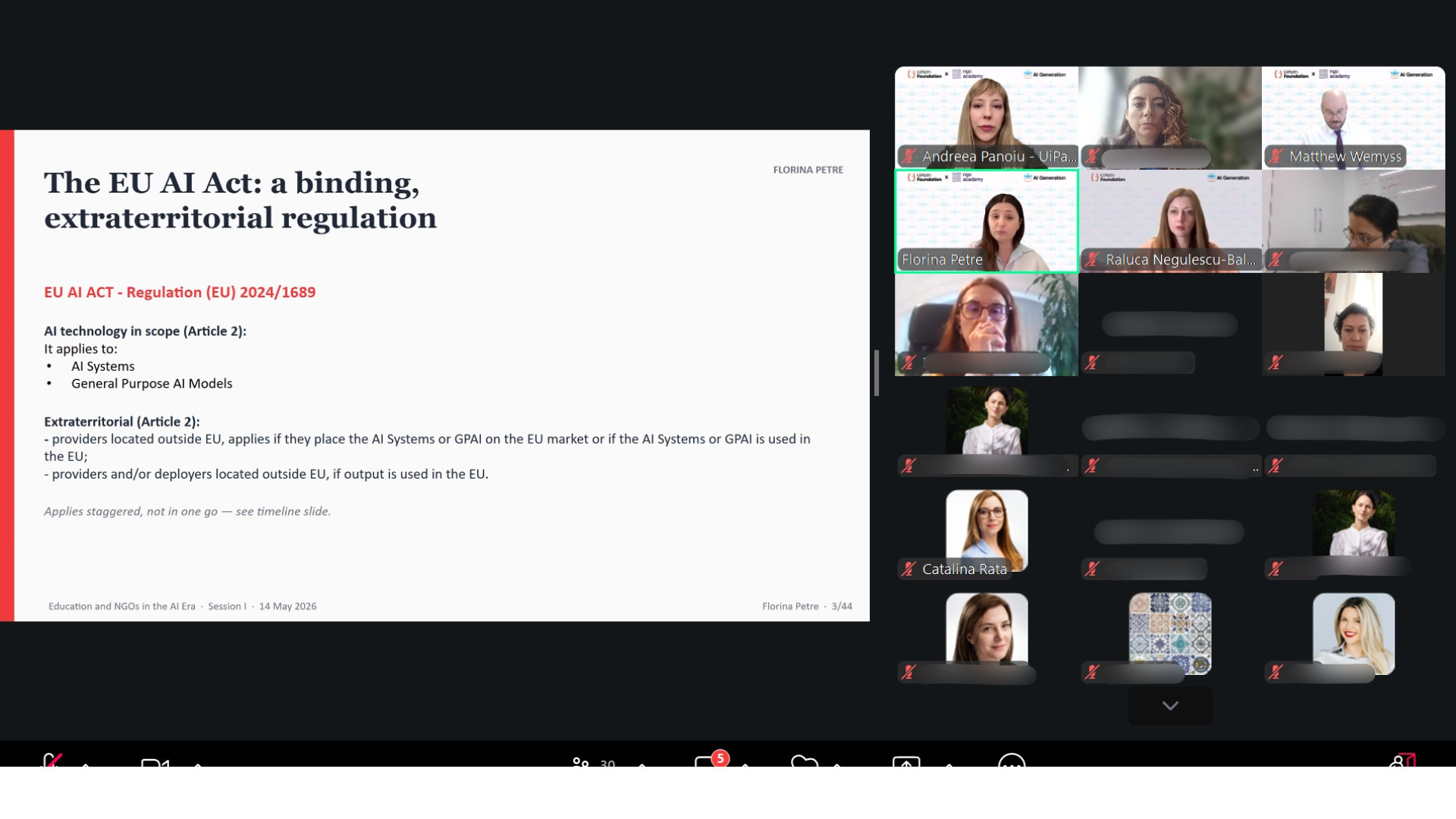
A major highlight of the conference was demystifying the legal landscape. Experts Florina Petre (UiPath) and Matthew Wemyss (Cambridge School of Bucharest) delivered a crucial reminder: the EU AI Act is a binding, extraterritorial regulation that applies to any organization whose AI outputs are utilized within the EU.
Most non-profits operate as deployers (using off-the-shelf AI tools for writing, HR, or case management). However, if your NGO builds a tool or materially modifies an existing model, you instantly cross into provider territory, triggering heavy compliance burdens.
Critical Risk Areas for NGOs:
Prohibited Practices: Applications that infer emotions in educational settings or workplaces have been strictly banned since February 2025.
High-Risk Triggers (Annex III): If your NGO uses AI to grade students, evaluate learning outcomes, triage humanitarian aid distribution, or calculate credit-style scoring for microfinance and bursaries, you are operating a “High-Risk” system. This requires strict human oversight, logging, and Fundamental Rights Impact Assessments (FRIA).
Shadow AI: The facilitators warned against the unmonitored layer of your AI footprint—such as staff or volunteers processing sensitive beneficiary data through free, unapproved online tools.
Boosting the Funding Cycle: The FUNCAP Framework
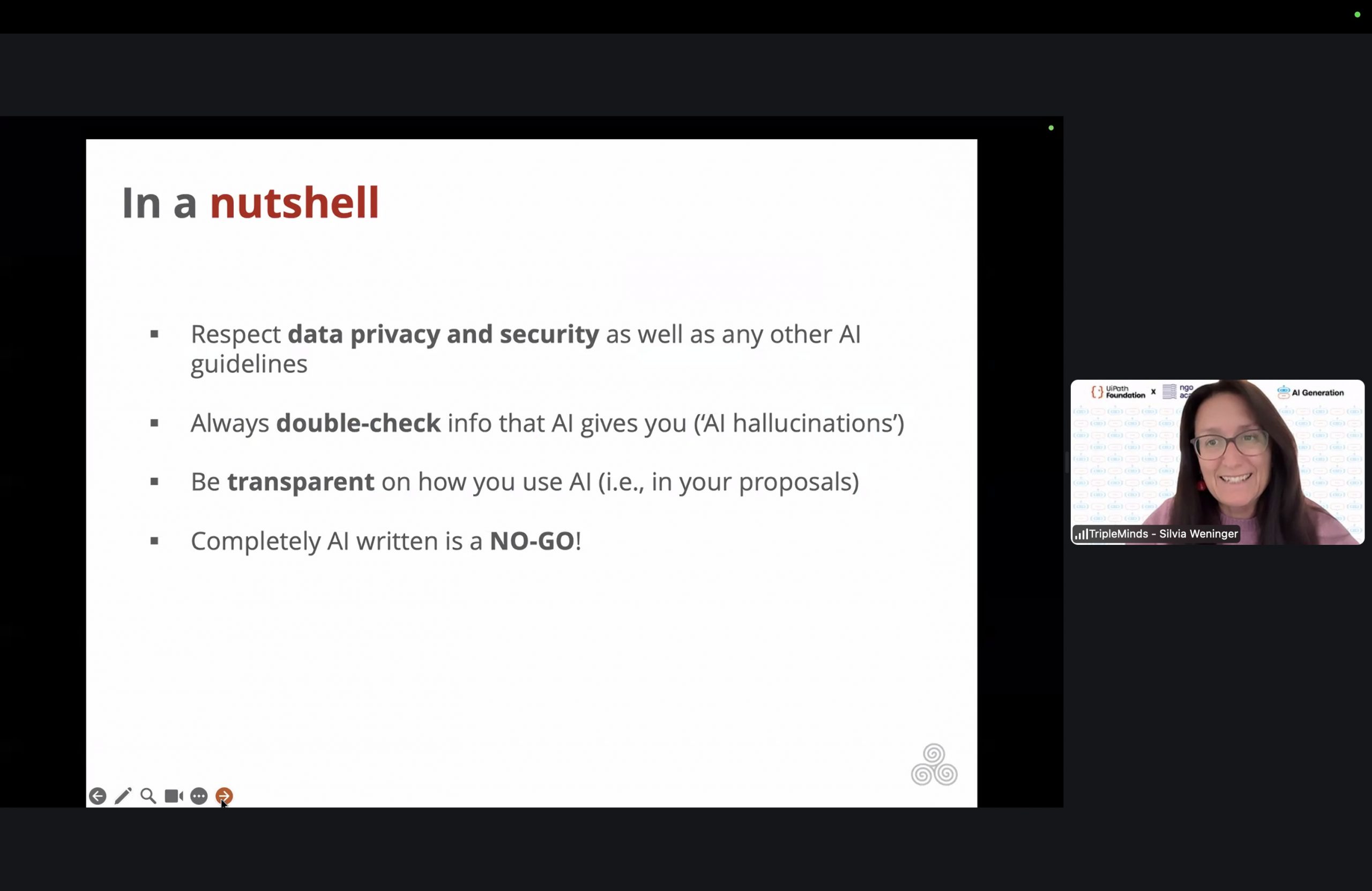
While navigating risk is essential, AI also offers unprecedented efficiency in securing resources. Silvia Weninger and Lisa Ringhofer from TripleMinds introduced participants to the FUNCAP framework, a step-by-step methodology to integrate AI across the four phases of the grant funding cycle:
Research: NGOs can deploy AI to execute weekly funding scans across targeted donor websites and public directories, utilizing tailored prompts to output organized tracking tables. Tools can also calculate a “Strategic Fit Score” to prioritize which foundations align closest with your mission.
Relate: Use AI to analyze donor psychology, map corporate philanthropy networks, and simulate conversations to prepare your team for high-stakes donor meetings.
Request: AI excels at drafting narrative sections, brainstorming logic models, and translating complex frameworks into catchy, storytelling-driven project proposals.
Renew: Accelerate your Monitoring & Evaluation (M&E) by using AI to build logical outcome pathways and generate professional, visual impact reports for your donors.