Impact

Member Story #19: On Human Trafficking in Albania with Gazmir Memaj and Redion Qirjazi

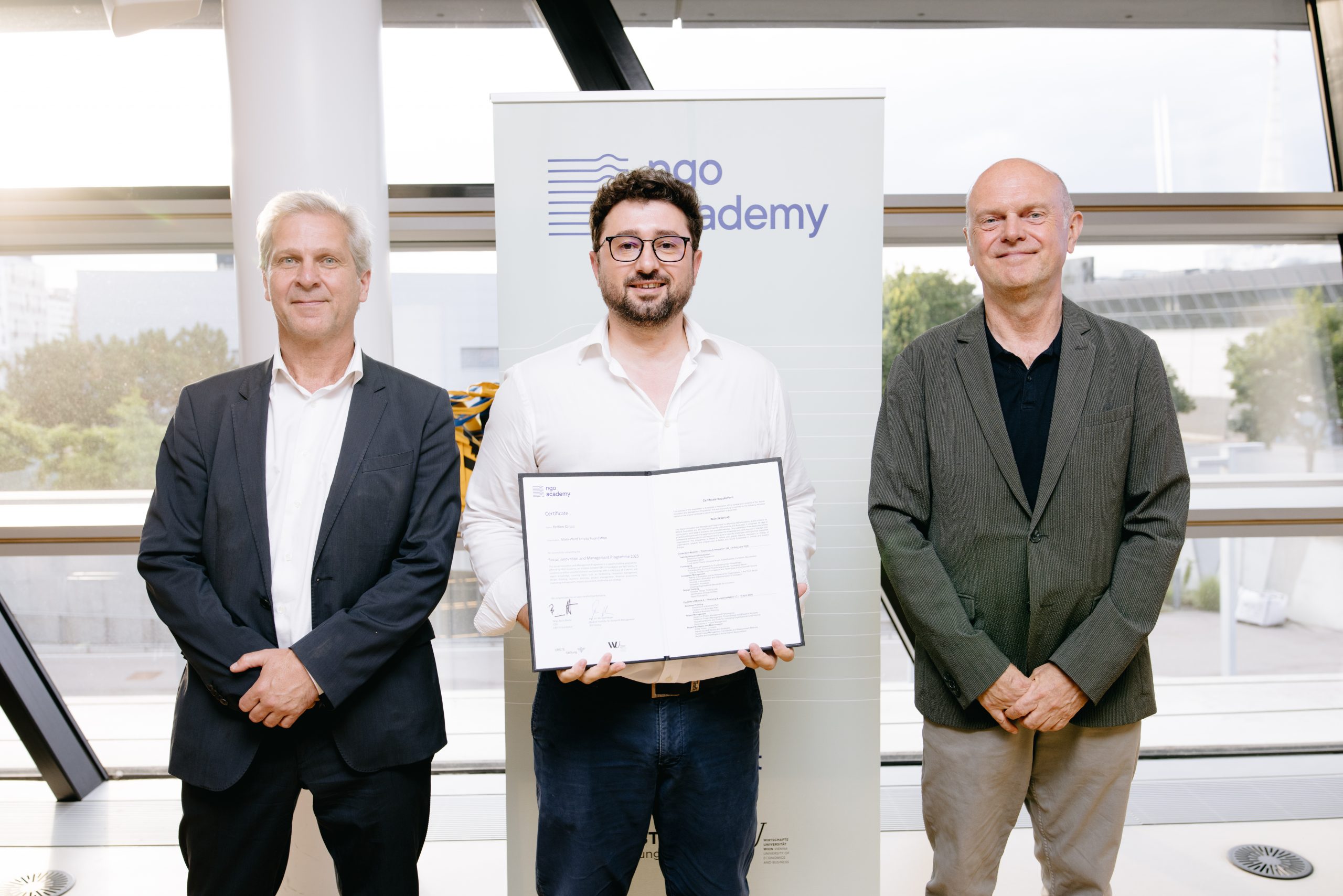
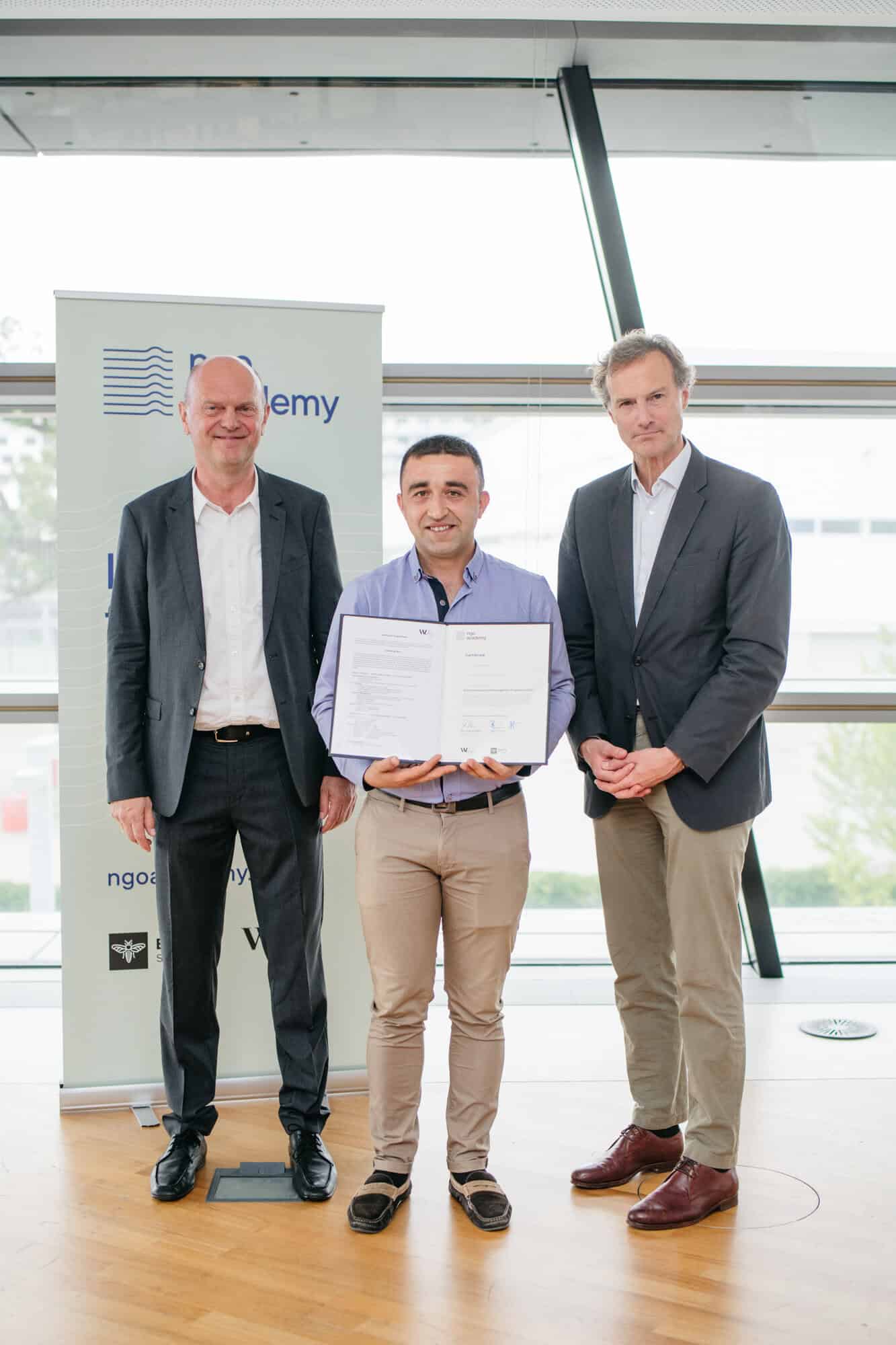
Gazmir Memaj and Redion Qirjazi are both part of our Albanian Member Organisation Mary Ward Loreto Foundation. Both have successfully completed the Social Innovation and Management Programme. Further, Gazi has graduated from the MSc Social Innovation and Management which Redi is currently attending.

Mary Ward Loreto Foundation has been at the forefront of the fight against human trafficking and modern slavery in Albania since 2012, working to protect and empower survivors while preventing exploitation through community-based action. Through its network of local Advice and Service Centers, the foundation provides direct support to victims and survivors, working closely with communities and partner organisations across the country. We spoke with Gazi, Programme Manager of the Resilience and Social Innovation Programme, who has worked with MWL since 2014 after two decades in the nonprofit sector; and Redi, the foundation’s CEO, a former Army officer with a background in counterterrorism and security strategy who brings a problem-solving approach from his military and consulting career to the fight for human rights.

"What concerns me is how fast trafficking and modern slavery itself is adapting, faster than our institutional responses. The digital dimension adds another layer."

You have both been working at MWL and in the anti-trafficking sector for some time now. How has the landscape changed in recent years, and are there any shifts that particularly concern you?

Gazi: It is a question I find myself reflecting on often, because the landscape has shifted in ways that both inspire and unsettle me.

When I started this work, first in communities on Tirana and Durres periphery, then progressively with MWL, the conversation was largely about identification and rescue. Over the years I have watched the field mature into something more systemic. We now talk about root causes, survivor-informed design, sustainable shelter funding, regional cooperation. Projects like Safe Haven Western Balkans, which I’m currently managing, would have been difficult to even conceptualize a decade ago. That evolution genuinely encourages me.

But what concerns me is how fast trafficking and modern slavery itself is adapting, faster than our institutional responses. The digital dimension adds another layer. Online recruitment and exploitation have outpaced both legislation and frontline capacity. We reached over 400 service providers through our training sessions in 2023 alone, and I see how hard they work just to keep up.

The shift that perhaps surprised me most, though, is the reintegration gap. Through our Home Office Returns Reintegration Programme, I work with people returning to Albania and I see how thin the safety net becomes once formal support ends. We’ve made real progress on identification and shelter. What comes after remains unfinished work.

So, I carry both things: genuine pride in how far the sector has moved compared with the early times, and a restless awareness that the problem keeps evolving and changing faster than what we can offer and propose as possible solutions.

Redi: I have been working in this sector for a little over two years now and the biggest challenge and transformation of the trafficking ecosystem, in relation to Albania, is the fact that we are becoming more and more a destination country for trafficking of foreigners into Albania. In the recent years, Albania has seen considerable development in the services and tourism industry, while at the same time experienced a major population decrease as more and more citizens chose to leave Albania for a better life abroad. The increasing needs for labor coupled with immigration, have created a major vacuum in the labor force, which is rapidly being filled by an inflow of foreign cheap labor.

This phenomenon has exposed many fallbacks of our current system, particularly issues related to institutional structures and processes that would enable effective response to the challenges of human rights violations of foreigners inside the country. We have witnessed a major fallback among key institutions in their ability to provide protection and support for foreigners who are victims of human trafficking, and for the most part we have found it challenging to adapt to the rapid expansion of this issue. At the moment Mary Ward Loreto Foundation is building a dedicated Advice and Service Center for Internationals who are victims of human trafficking in Albania. This would be the first center in Albania that is uniquely tailored to helping foreign victims of human trafficking.

"The increasing needs for labor coupled with immigration have created a major vacuum in the labor force, which is rapidly filled by an inflow of foreign cheap labor."

In one of your course projects, I came across a truly innovative initiative: training beauticians and beauty professionals to recognize signs of gender-based violence and connect those affected with support. What was the idea behind that?

Redi: Unfortunately, the project was not implemented because we were unable to secure funding, but it remains an initiative we are very committed to and hope to bring to life in the future. The project, called Shine,” was designed as a prevention initiative focused on gender-based violence. Its core idea was to train beauty professionals to recognize signs of domestic violence and, potentially, human trafficking. We were particularly interested in this approach because research and community experience show that around 35% of women in local communities share personal experiences of domestic violence with their beauticians, which makes these professionals an important and often overlooked point of trust and support.

The intention was not only to help beauty professionals identify possible signs of abuse, but also to equip them with the skills to respond sensitively and guide women toward specialized support services. In addition, the project envisioned partnerships with beauty brands to provide training for 100 women survivors of domestic violence, helping them learn makeup skills from professionals. The idea behind this component was to support their healing journey by strengthening self-confidence and creating a positive, empowering experience.

Work like yours can take a real emotional toll. What keeps you going, where do you find strength and hope on the hard days?

Gazi: Emotionally, I find my strength in two places. The first is my faith. I am convinced that purposeful work is never wasted, even when results are slow or invisible. The second is people. I am fortunate to be surrounded by a great team in the widest sense of the word: MWL staff, our partners, donors, volunteers, and friends of the mission. Their understanding and care are not a backdrop to the work; it is part of what makes the work possible.

Redi: For me, it comes down to a strong sense of purpose and accomplishment. I’m energized by the challenges this work brings, it keeps me engaged, constantly thinking, and pushes me to keep expanding our impact and operations. At the same time, what makes this work truly meaningful is the knowledge that it can directly change someone’s life. There is a deep sense of fulfillment in knowing that what you do every day can make a real difference for another person.

"The programme gave me a much stronger understanding of innovation ecosystems, and the role collaboration plays in creating lasting social impact."

You have both participated in the Social Innovation and Management Programme. Which impressions or learnings from that experience have stayed with you – and how have they shaped the way you work today?

Gazi: The way you grow by helping others grow – people, organizations, and entire countries – is not just an inspiring model; it is one that deserves to be lived and replicated, both personally and professionally. I want to express my deep appreciation and gratitude to the ERSTE Foundation and NGO Academy, as institutions, and as a group of remarkably human and genuinely supportive professionals.

Redi: The programme gave me a much stronger understanding of innovation ecosystems, and the role collaboration plays in creating lasting social impact. Just as valuable was the international network it created, which continues to shape my perspective today. Also, visiting successful social entrepreneurship initiatives in Austria made the learning especially tangible, while the quality of the professors and the teaching approach made the entire experience both rigorous and highly practical. Overall, the experience has strengthened the way I think about leadership, innovation, and cross-sector cooperation in our work.

After completing the Social Innovation and Management Programme, you both chose to go even further: Gazi, you have already completed the MSc in Social Innovation and Management, and Redi, you have just embarked on that journey. What made you decide to take that next step?

Gazi: There are two main components that led my decision to take the next step. By one hand, the desire to keep learning, and by the other hand, the professionalism and the avantgarde teaching and learning methodologies used by the best lectors and professors, I have ever known.

Redi: For me, the decision was driven by three factors. First, the opportunity to combine professional development with academic learning in a way that is directly relevant to my role and to the challenges we are addressing at MWL. Second, the value of being part of a strong international network of practitioners and peers, which creates space for exchange, reflection, and new perspectives. And third, the need to continue developing new ideas and identifying what we should explore next as an organization, especially if we want to remain innovative, responsive, and effective in a constantly evolving field.

Let’s imagine it is September 2027, Redi has just received his diploma for completing the M.Sc. – what do you hope to have achieved by then, both for MWL and for the broader fight against human trafficking in Albania?

Gazi: I hope we will be growing as a team to have full capacities for innovating and for contributing in the financial sustainability of the MWL foundation and perhaps together with other partner organizations including URAT (United Response Against Trafficking) Network we might scale the success in other partner NGOs too, increasing the potentials to better fight modern slavery.

Redi: By September 2027, I would hope to see several of our key ideas translated into concrete achievements. That would include launching the first charity shop in Albania, establishing an international Advice and Service Center tailored to foreign victims of trafficking, and significantly expanding both the size and scope of MWL’s operations. I would also hope that, by then, we have strengthened our strategic partnerships, moved closer to financial sustainability, and further consolidated MWL’s role as the most relevant NGO working in the field of human trafficking in Albania. More broadly, I would like to believe that our work has helped push the sector toward more innovative, responsive, and effective solutions for addressing trafficking in all its evolving forms.

About NGO Academy Member Stories

NGO Academy currently has 500+ member organisations operating in 14 countries including Austria, Albania, Bosnia and Herzegovina, Croatia, Czechia, Hungary, Kosovo, North Macedonia, Montenegro, Moldova, Romania, Serbia, Slovakia, and Slovenia. All these organisations are giving impulses for civil society and they are the heart and soul of the NGO Academy Network. Year after year, we see great social innovations and projects coming to life in NGO Academy Member organisations. With NGO Academy Member Stories, we want to open the floor to these projects, enable organisations to learn from each other and to connect our NGO Academy Members.

You have a story for us as well? We’d love to hear it! You can submit it here or send us an e-mail directly to info@ngoacademy.net